
I’ve spent years guiding players understand what makes a casino account secure versus one that’s prone to crack https://vegaskaszino.org/login/. The gap becomes noticeable right at the account journey. When you establish a login at Vulkan Vegas Casino, you’re not just picking a username and password—you’re accessing a protected environment built on layered verification, encrypted data handling, and real-time monitoring. I want to take you through every stage of that environment, from the initial sign-up form to the ongoing safeguards that keep your balance and personal details out of anyone else’s reach. This knowledge will let you proceed with confidence every time you log in.
Two-Factor Authentication and Advanced Login Measures
I regard two-factor authentication the single most impactful upgrade you can implement to your account after registration. Vulkan Vegas Casino offers time-based one-time passwords generated by authenticator apps such as Google Authenticator or Authy. Once enabled, logging in demands both your password and a six-digit code that updates every thirty seconds. Even if someone acquires your password, they cannot access your account without physical possession of your enrolled device.
Setting Up and Managing 2FA from Your Dashboard
To enable this protection, head to the security settings within your account profile. The system will show a QR code that you scan with your authenticator app. I recommend saving the backup codes that appear on the same screen in a secure offline location, such as a printed slip kept in a locked drawer. These one-time codes will let you restore access if your phone is lost or reset. Without them, recovery requires a manual identity re-verification that takes longer.
Beyond 2FA, the platform offers login notifications. You can opt to receive an email or an SMS every time a new device or browser accesses your account. I leave this setting active on all my own test profiles because it provides me immediate visibility of any unauthorised attempt. If you ever get a login alert that you don’t know, you can lock the account instantly through the same notification email, buying precious time to change your password and contact support.
Device fingerprinting works silently in the background. The system creates a profile of the hardware and browser characteristics you normally use. A login attempt from a device with a drastically different fingerprint, like a different operating system, screen resolution, or language pack, may trigger an additional verification step, often a one-time code sent to your registered email. This friction is minimal but highly effective against credential-stuffing bots that switch through proxy networks.
Identifying and Evading Account Security Threats
No security system can fully safeguard a user who unknowingly provides credentials to a fraudster. I’ve noted that phishing remains the most common attack vector, often through emails that imitate official Vulkan Vegas Casino branding. A genuine message from the operator will never ask you to click a link and enter your password directly. Instead, it will direct you to navigate to the official website by typing the URL yourself. I teach myself to hover over every link before clicking, checking that the domain is exactly vegaskaszino.org and not a lookalike with substituted characters.
Social engineering through live chat or phone calls is another risk. No legitimate support agent will ever ask for your password or your two-factor authentication code. If you receive an unsolicited call claiming to be from the casino’s security team and asking for such details, hang up immediately and initiate contact through the official support channel yourself. I’ve encountered cases where fraudsters spoof caller IDs convincingly, so relying on the official website’s contact methods is the only safe approach.
Malware on your personal device can record keystrokes or steal session cookies. I ensure my operating system and browser updated, run a reputable antivirus tool, and avoid downloading files from untrusted sources. For an added layer of isolation, some players decide to access their casino account exclusively through a dedicated browser profile with no extensions installed. While this may seem excessive, it dramatically reduces the attack surface and is a practice I admire for high-balance accounts.
Step-by-Step Registration: Securing Your Identity from the Start
When you go to the Vulkan Vegas Casino registration page, the first thing I observe is that the form requests only for basic data: a valid email address, a phone number, a chosen currency, and a strong password. There is no demand for excessive personal detail at this stage, which reduces your exposure before you have even entered the platform. I always recommend using an email address that you actively check, because that inbox will become the hub for security notifications and recovery links.
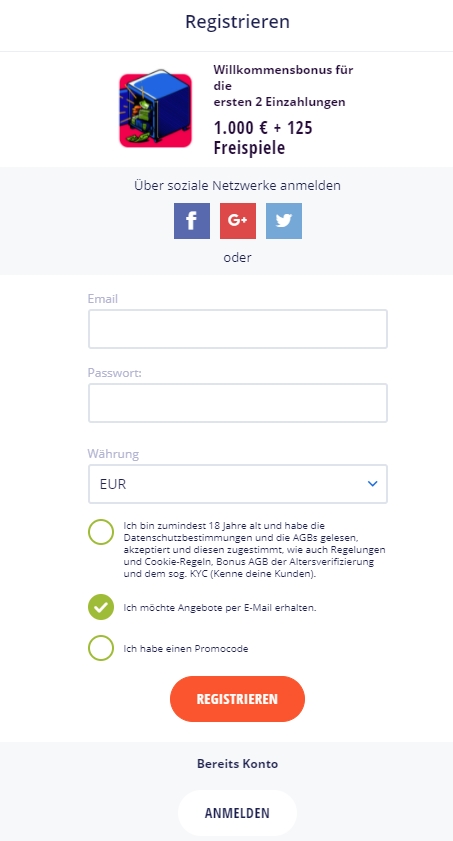
After completing the initial fields, you’ll be asked to confirm that you are at least eighteen years old and that you agree to the terms and conditions. This step isn’t a routine; it’s a legal gate that ties your account to a binding age verification commitment. The system logs the IP address and timestamp of this acceptance, creating an audit trail that protects both you and the operator in the event of any future dispute about eligibility.
Once you press the create account button, the platform dispatches a verification email to the address you provided. I can’t stress enough how important that single click is. It confirms that you control the inbox and associates the account to a real, reachable identity. Until you perform this email confirmation, certain features such as withdrawals remain blocked. I urge you to complete it immediately, because an unverified email leaves your account in a half-activated state that makes difficult password recovery later.
During registration you also have the option to set a security question or a memorable word, depending on the current interface. If this field is available, I strongly advise you to treat it as strictly as your password. Choose an answer that’s not easily inferred from your social media profiles. A fictional pet name or a random phrase stored in your password manager works far better than your mother’s actual maiden name. This small action pays off if you ever need to verify your identity over live chat.
The KYC Verification Process: What to Expect and Why It Matters
Identity verification is the most critical step in turning a basic login into a fully functional, withdrawal-ready account. I appreciate that providing personal documents can feel intrusive, but I view it as the process that prevents money laundering, identity theft, and underage play. At Vulkan Vegas Casino, the KYC flow is integrated directly into your account dashboard under a dedicated verification tab, so you never need to send sensitive files through unencrypted email.
The standard requirement is a government-issued photo ID. A passport, national identity card, or a driving licence that displays your full name, date of birth, and photograph is acceptable. The system will prompt you to upload a colour scan or a high-resolution photo of the document. I always suggest positioning the document on a dark, flat surface under good natural light, because reflections and shadows are the main reason for rejection and hold-ups.
A second document is typically needed to confirm your residential address. A recent utility bill, bank statement, or official government correspondence dated within the last three months works best. The document must include your name and the address linked to your account. I’ve seen players attempt using mobile phone bills or insurance documents, and while some are accepted, the clearest path is a water, electricity, or internet service bill. Digital PDFs downloaded from your provider’s portal are fully acceptable.
In some cases, the compliance team may request a third element: proof of payment method. If you deposited with a credit or debit card, you might be asked to upload a photo of the physical card with the middle eight digits covered, leaving only the first six and last four visible, along with your name. This step verifies you as the rightful cardholder and blocks chargeback fraud. The complete review process typically completes within twenty-four hours on business days, and you get an email alert once your status changes.
Password Administration and Recovery Procedures
I need to discuss password recovery directly because it’s the time when many players become most anxious. At Vulkan Vegas Casino, the reset process commences with a link on the login page that prompts for your registered email address. The system delivers a time-limited, single-use reset token to that inbox. The token runs out quickly, usually within thirty minutes, which prevents old links from being exploited. I strongly recommend finishing the reset on the same device and network you normally use, because an unfamiliar environment may prompt additional security checks.
Picking a new password during recovery follows the same strength rules as initial registration. I counsel against reusing any password that’s ever been connected with another service, no matter how long ago. A dedicated password manager renders this effortless and also defends against the human tendency to create predictable patterns. If you think that your email account itself may be compromised, safeguard that account first through its own provider’s recovery tools before changing your casino password, otherwise the reset link could be captured.
For players who favor an extra layer of control, the account dashboard includes a password change function that needs your current password before a new one can be coinmarketcap.com set. This protects you in situations where you might keep your account logged in on a shared machine. I also suggest checking the active sessions list periodically. From the security panel you can observe every device and location currently maintaining a valid session token and revoke any that you don’t know with a single click.
The Core of Account Protection at Vulkan Vegas Casino
Login protection at Vulkan Vegas isn’t based on just one barrier. I view it as a set of independent controls, each built to intercept what another might overlook. The first layer is the mandatory strong password rules during registration. The system will reject any password that’s too short, too common, or entirely numeric, compelling you to mix uppercase letters, lowercase letters, digits, and special characters. This single rule eliminates the vast majority of automated credential-stuffing attacks that inferior platforms face.
Behind the scenes, all data moving between your device and the casino servers employs TLS 1.3 encryption. I can confirm that this protocol keeps intercepted traffic indecipherable, even on open public Wi‑Fi, as long as you haven’t installed unverified certificates on your device. The login endpoint itself is guarded by rate limiting. After a limited number of consecutive failed attempts from the same IP address, the system imposes a temporary lockout and notifies the account holder by email. This frustrates brute-force tools without harming you for an accidental typing mistake.
Another foundational element is the automatic session timeout. If you keep your account idle for a defined period, typically fifteen minutes, the platform will close the session and require a fresh login. I’ve seen many players value this feature once they recognize it protects them if they step away from a shared or public computer. Together with the option to manually log out from all devices through the account dashboard, it offers you full control over where and when your credentials stay active.

The infrastructure also segregates sensitive account data from the public-facing web servers. Payment details, identity documents, and password hashes reside in separate, access-controlled environments. Even if a front-end vulnerability were ever found, the core identity vault would stay out of reach. I mention this not to worry you but to illustrate the depth of architectural planning that is involved in protecting a single login.
Ongoing Account Monitoring and Help Resources
Account security isn’t a one-time setup; it requires periodic review. I make it a habit check my transaction history and login logs at least once a month. The Vulkan Vegas Casino dashboard shows a clear, chronological record of every deposit, withdrawal, and session start. Any entry I don’t recognize becomes an immediate trigger to contact the support team through the live chat feature, which is available directly from the logged-in interface without needing to share credentials.
The support team performs a critical role in the security ecosystem. They can place temporary holds on accounts, escalate suspicious activity to the fraud department, and guide you through enhanced verification if your account shows signs of compromise. I’ve found that providing a clear, concise description of the issue, along with any relevant screenshots or email headers, speeds up resolution significantly. The team operates under strict protocols that prevent them from making changes to your account until your identity is confirmed through multiple channels.
For players who desire to take a proactive break, the responsible gaming tools include a self-exclusion option that locks the account for a defined period. While this is primarily a player protection feature, it also functions as a security measure by making the account completely inaccessible, even with valid credentials. I see it as a useful tool if you ever suspect that someone else might have gained access to your login details and you need time to regain full control without the pressure of immediate action.
Finally, I recommend keeping your contact details up to date. An old email address or a phone number you no longer use disrupts the recovery chain and leaves you stranded if a security event occurs. Updating these fields takes less than a minute in the profile settings, and the system will require a confirmation from the new address before the change takes effect, preventing an attacker from silently redirecting your notifications. This small maintenance task is one of the most effective ways to preserve the integrity of everything we’ve discussed.